Playing Guessing Games With Your Food
Many of the eating habits from our early childhood tend not to serve us well later on in adulthood as we strive to get into better shape.
Growing up, our parents didn’t teach us about portion sizes and meal timing, so we tend to overlook how much food we consume.
Having a written food log tends to overcome this (see Why You Should be Using a Food Log); itemizing food regularly can seem like an overwhelming task if we’re not well conditioned to do so.
Recording in a food log can become even more cumbersome for individuals eating more than 3 meals per day.
Food logging is now more important than ever, given the larger portions offered at dine-in restaurants and meal delivery services. When we don’t take portion sizes into account, it’s very easy to gradually gain body fat without noticing.
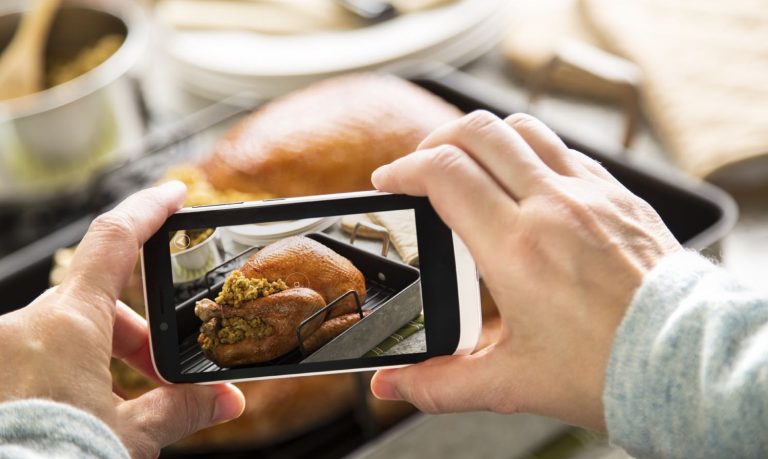
Since food logging is something professional bodybuilders and fitness models tend to track habitually, newcomers to the fitness lifestyle may find it difficult to adapt to this. Taking photos of your meals throughout the day can be a simpler way to track your food. With smartphone technology at our fingertips, we can now log our meals much more easily and accurately than before.
This article will go over the benefits of using your smartphone to fine-tune your diet for the best results with your fitness program.
How to Use Your Smartphone to Track Your Calories
When Steve Jobs introduced the iPhone in 2007, it was the biggest breakthrough in mobile technology, helping transform society as we know it. The phone not only had the full functionality of a laptop, but it also came with a small camera to help us capture some of our most precious memories.
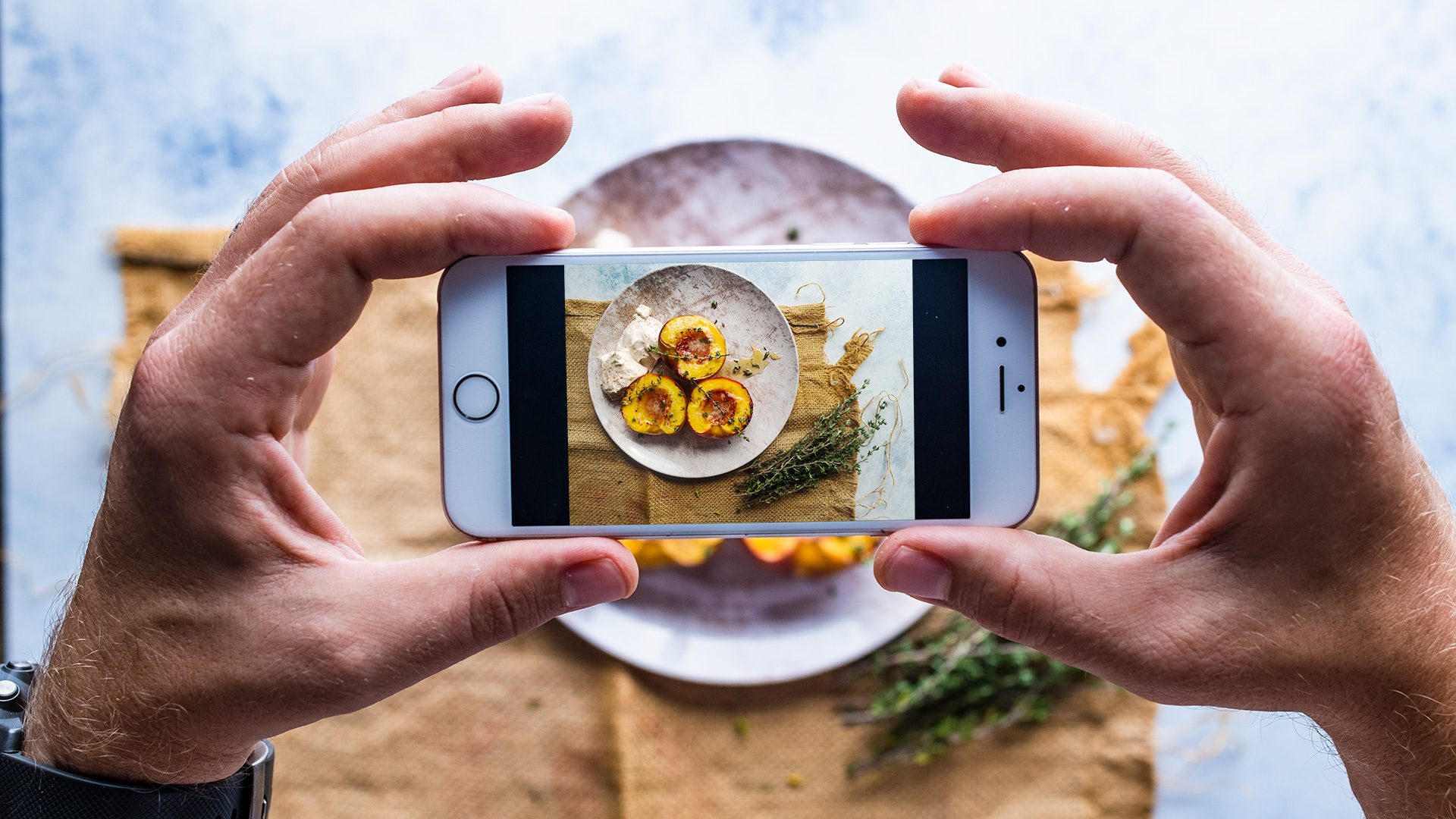
Some of the most precious moments are the meals that we share with friends, family, and especially ourselves. Frequently, you’ll see someone you know or a stranger take pictures of their food on their smartphone with artistic precision to capture a savory moment.
The Journal of Marketing Research even found that this behavior changed our anticipation and attitudes towards our food, leading us to perceive it as having a better taste. Not only does food photography help us perceive the taste of our meals much differently, but it also gives an accurate depiction of how much food we’re actually consuming.
When calories are broken down into macronutrients (protein, carbohydrates, fats), we can get a specific analysis of the portion sizes.
Portion sizes are important because they can determine how many macronutrients (protein, carbohydrates, or fats) we consume at each meal. If you have difficulty losing fat during your diet, you can go back and adjust the amount of carbohydrates based on the portion sizes you recorded.
As food photography has transformed from an exclusive art form to a commonplace activity for the masses, we can learn to take great photos of meals and document them for our benefit.
As long as your photo has proper lighting and is well centered in the frame, the picture should be aesthetically pleasing and provide enough detail for your food log. After you capture the picture, document the serving sizes for each food group in the photo (see How to Use the Portion Sizing Method).
The first step is to identify each food group in each photo. Whether it’s protein, carbohydrates, or fats, you should be able to estimate the amount of food on your plate by hand/palm measurements (ex. 1 serving of rice = 1 palm, 1 serving of veggies = 1 fist).
The second benefit of taking photos regularly throughout the day of your food is the timestamp. The timestamps of the photos record when you are consuming food during the day, making it easy to determine the number of hours spent in a fasted/fed state each day (see What is Intermittent Fasting).
Once you capture the serving sizes and times, record this information into your food log and itemize it.
The Wrap Up
Taking photos with your smartphone can help you break old habits of eating large portions and consider the types of food you regularly consume. While food logging is still a tedious activity, it’s much simpler today thanks to photos that provide timestamps for what and when we’re eating.
What else do you want to know?
What is Intermittent Fasting?
Why You Should Be Tracking Your Meals
Why Changing Your Diet Style Is Irrelevant for Fat Loss