Knowing The Difference Between Compound & Isolation Movements
Weightlifters generally have an idea of the muscle groups they’re going to work on before they step into the gym, regardless of whether they’re planning to perform a full-body routine or workout splits.
No matter which body part you’re working on, a complete workout will consist of either compound or isolation movements.
Compound movements let you work your larger, heavier muscles, while isolation movements target smaller muscles that require more time under tension for advanced development.
Knowing their purpose, using these exercises correctly can make workouts shorter and more efficient.

Compound Movements
Compound movements use multiple prime muscle groups and involve two or more joints. In contrast, isolation movements involve a single joint and target a single main muscle group.
Compound exercises are typically needed to lift heavy weights, such as in the barbell squat or bench press.
They use small accessory muscles to stabilize and assist movement.
Beginners should base workouts on compound exercises, since their nervous systems have not yet developed stability and balance.
Compound movements also make your workouts more efficient by compressing time frames. Rather than adding unnecessary sets to train your muscles, you can perform the same level of work with heavier, low-rep exercises to build larger amounts of strength early in your training years.
Exercises that engage large muscle groups trigger a stronger hormonal response. Testosterone and growth hormone are released as these recruited muscle fibers require more energy for repair.
Compound exercises are most effective when performed in low-rep ranges (6-12 reps).
Isolation Movements
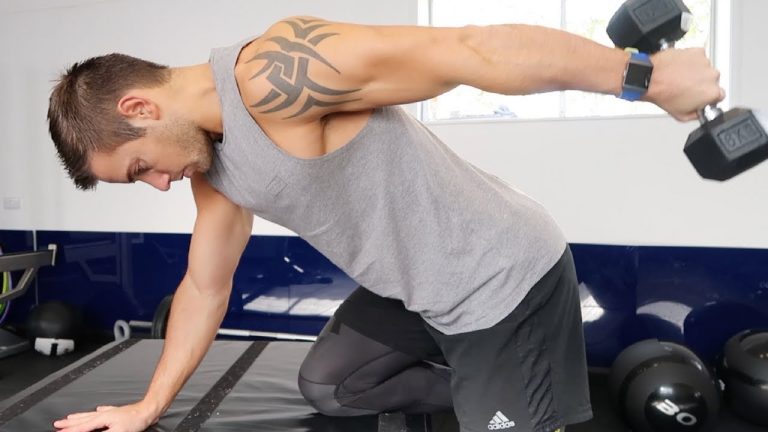
Isolation exercises involve movement at one joint and target a single muscle group. Examples include the bicep curl and the dumbbell fly, each targeting a single muscle group.

Isolation movements are more time-intensive because they require the development of small accessory muscles for a well-balanced, aesthetic physique.
This is also why it’s better to focus on this progression once you’re an intermediate or advanced weightlifter with a strong foundation. Developing muscle using this method often takes many years of training to see great results.
Isolation movements also need higher repetitions, typically in the 12-15 range.
The Wrap Up
There are both benefits and downsides to using compound and isolation exercises in a workout program. If you’re new to bodybuilding, focus on compound movements to build the stability and muscle memory needed for more advanced exercises. Compound lifts help you gain more size, and isolation movements are best for creating symmetry.